
What If the Child Is Not the Problem?
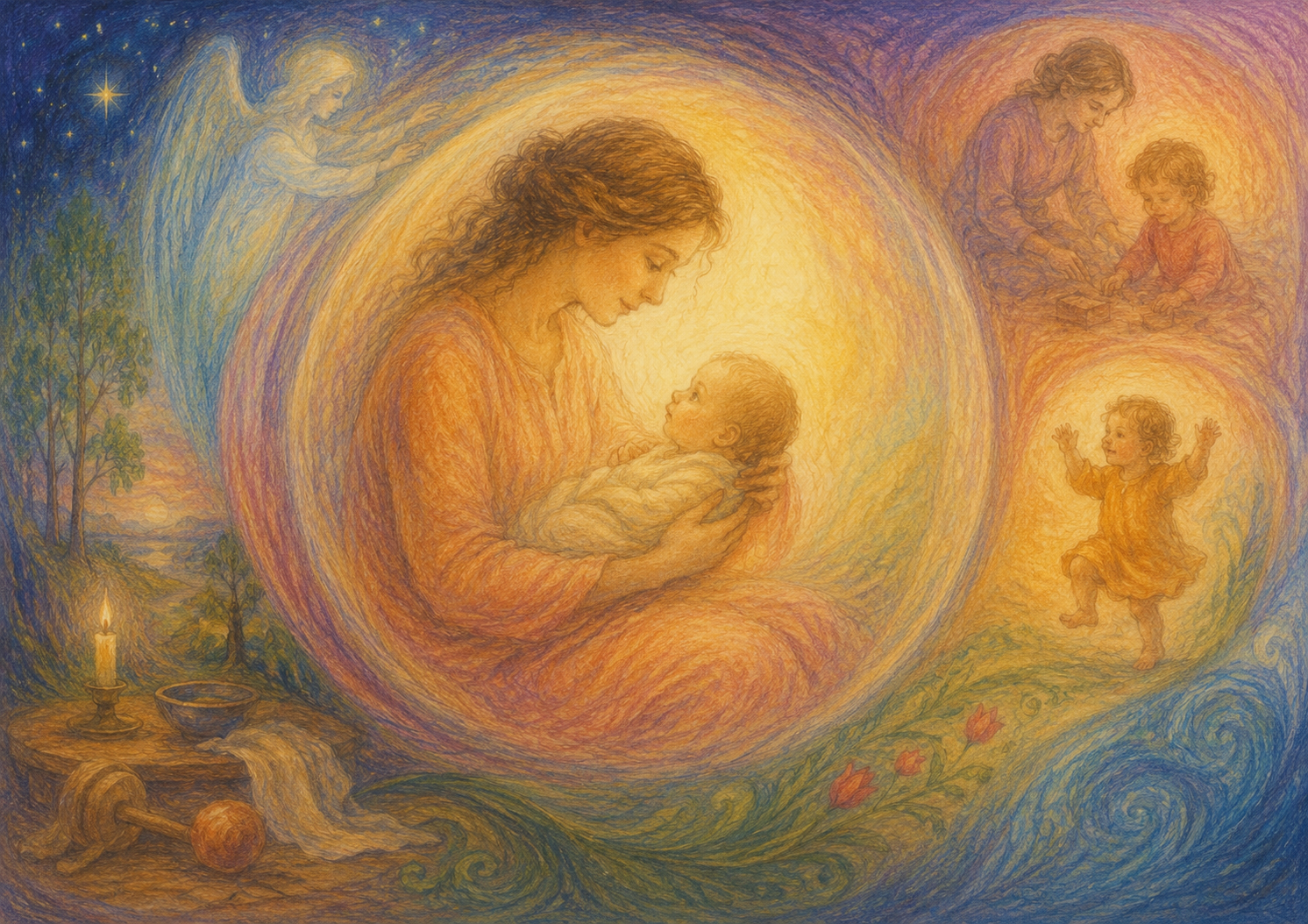
There was a time when childhood was treated as something sacred.
Not perfect. Not easy. But sacred.
A child was not seen merely as a future worker, student, or successful citizen. A child was understood as a soul arriving into the world carrying mystery, purpose, and an inner direction that adults could not fully control.
Modern life has drifted far away from this understanding.
Today we are obsessed with outcomes.
We want children to perform early, adapt quickly, behave properly, and compete successfully. We measure intelligence before imagination has even had time to bloom. We praise productivity while slowly starving wonder.
And then we ask why so many children seem anxious, disconnected, angry, distracted, or emotionally exhausted.
Perhaps children are not failing us.
Perhaps they are reacting to a world that no longer understands the deeper meaning of childhood.
Children Arrive With Something Already Alive Inside Them
One of the greatest mistakes adults make is believing they must completely shape the child.
As if the child were empty clay.
But anyone who has truly observed children knows this is not true.
Every child enters life carrying something unmistakably individual.
A certain rhythm.
A way of looking at the world.
A hidden temperament.
A unique emotional atmosphere.
An invisible inner calling.
Even very young children reveal distinct ways of being long before adults begin teaching them anything.
Some are dreamlike and inward.
Some burn with intensity.
Some are deeply sensitive.
Some seem unusually thoughtful, almost ancient.
Some resist systems instinctively.
These qualities are not accidents.
Children are not unfinished products waiting to be manufactured by society. They arrive carrying an inner blueprint that asks to unfold naturally.
Education should help protect that unfolding — not replace it.
The Crisis of Modern Education
Modern education often treats children like minds that must be filled instead of souls that must be awakened.
Everything becomes mechanical.
Testing.
Scoring.
Comparing.
Diagnosing.
Correcting.
The child slowly disappears beneath systems and expectations.
When imagination weakens, learning becomes lifeless.
When beauty disappears, discipline becomes force.
When emotional connection disappears, children lose their natural desire to learn.
And this is exactly what many adults are witnessing today.
Children are overstimulated but uninspired.
Connected digitally but emotionally lonely.
Educated constantly but inwardly exhausted.
A child cannot grow healthily in an atmosphere where achievement matters more than meaning.
Sensitive Children Are Often Carrying Hidden Strength
Some children struggle more visibly than others.
They may appear anxious, resistant, emotional, withdrawn, or difficult to guide.
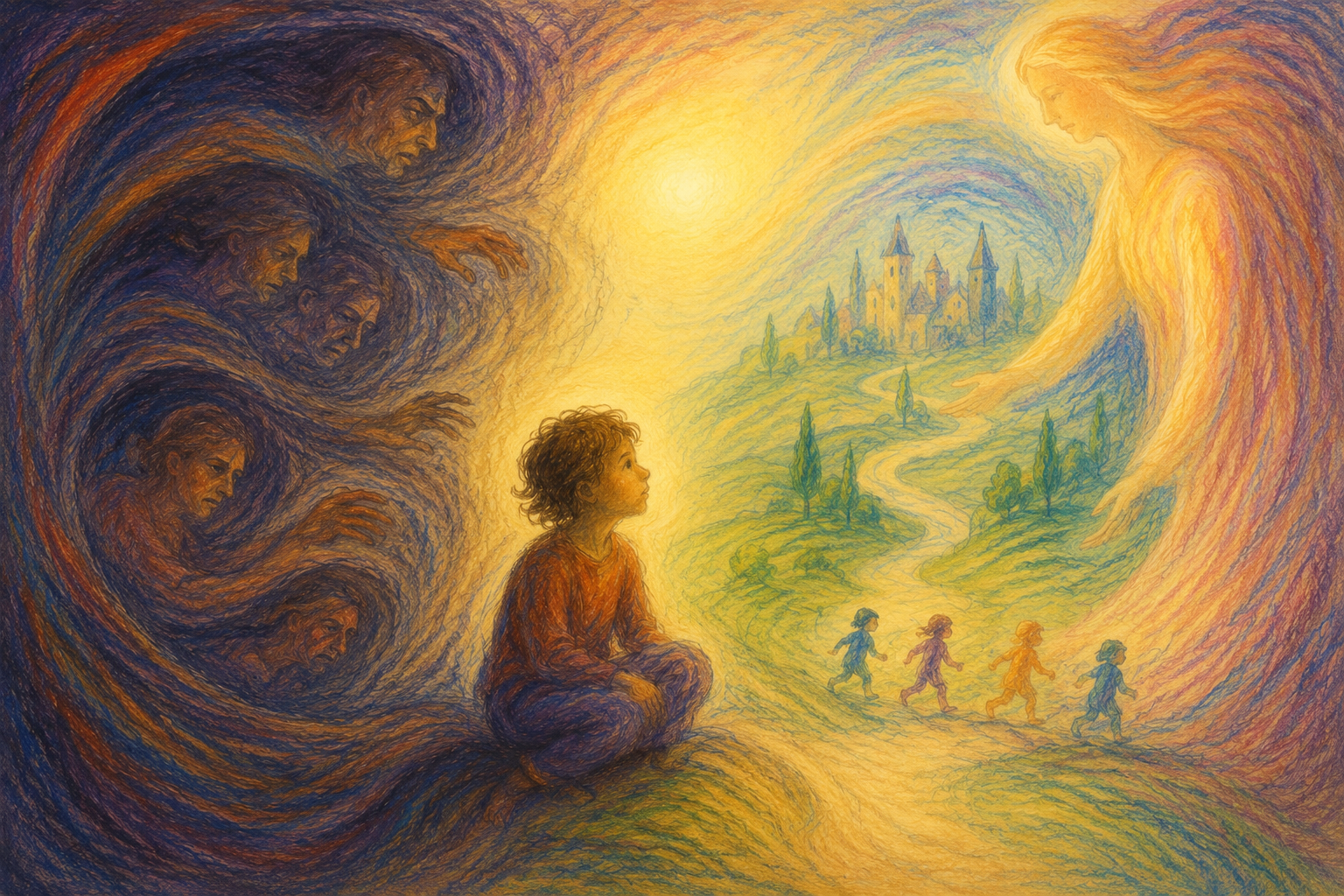
But highly sensitive children are often responding to things adults no longer notice.
They react to emotional dishonesty.
To pressure.
To coldness.
To environments that ignore imagination and inner life.
Many of these children are not weak.
They are simply unprotected.
In another kind of culture, their sensitivity might have been recognized as wisdom, creativity, intuition, or spiritual depth.
Instead, modern society often tries to suppress whatever cannot be easily standardized.
Education Must Begin With Reverence
Children do not only need information.
They need reverence.
They need adults who approach them not as projects to manage, but as human beings carrying unseen possibilities.
A teacher’s task is not merely to instruct.
A parent’s task is not merely to control.
The real task is to create conditions where the child’s inner life can unfold without fear.
This requires patience.
Observation.
Warmth.
Moral presence.
And above all, humility.
Because no adult fully “creates” a child.
At best, we accompany them.
The Imagination Is Not a Luxury
One of the tragedies of modern life is that imagination is treated as unnecessary.
But imagination is not escapism.
It is one of the deepest human capacities.
Children naturally live through images, stories, rhythm, movement, play, beauty, and wonder. These experiences nourish emotional and spiritual development far more deeply than constant intellectual pressure.
A child deprived of imagination eventually loses part of their relationship with meaning itself.
This is why stories matter.
Nature matters.
Art matters.
Music matters.
Silence matters.
These are not extras.
They are nourishment for the soul.
What Children Really Need From Adults
Not perfection.
Not endless control.
Not adults who always have the right answers.
Children need adults who are inwardly awake.
Adults capable of self-reflection.
Adults willing to slow down.
Adults who understand that emotional atmosphere shapes childhood more deeply than rules ever will.
A child learns not only from what adults say, but from who adults become in their presence.
Fear teaches fear.
Rush teaches anxiety.
Calm teaches trust.
Children absorb life long before they intellectually understand it.
Final Reflection
Maybe the deepest crisis today is not that children are changing.
Maybe it is that adulthood has become disconnected from the wisdom of childhood itself.
Children still arrive carrying wonder.
Still searching for beauty.
Still longing for truth, warmth, rhythm, meaning, and love.
But the modern world rarely slows down enough to meet them there.
And perhaps what we call “difficult children” are often the ones refusing most strongly to abandon their inner humanity.
Maybe they are not broken.
Maybe they are reminding us of everything we have forgotten.